UNDER THE SAME SUN
The movement of LGBTQIA+ people toward capital cities in Latin America is more than a survival strategy; it is a negotiation of power, a rupture in the imposed Script of normalcy.They migrate in search of safety, legal protections and economic opportunity, challenging the idea that power is fixed or absolute, seeking to escape the scripted narratives of restrictive religious and traditional structures that try to render them invisible. Conversely, those who stay in their hometowns perform a static act of resistance, refusing to be erased by the false reality that surrounds them.
This series captures their journeys through photographs taken in the urban centres of Cuba, Colombia, Venezuela, Chile, Brazil, Argentina, and Mexico. Each image reflects how we confront life within systems of illusion and oppression, highlighting moments where the unseen breaks through the cracks of the societal facade. By using photography as a political tool to hack the system's gaze, it reconfigures the erasure of our community in Latin America. We are not just documenting reality; we are constructing a counter-narrative that challenges the dominant simulation of the global landscape.
These people symbolize our struggles and triumphs, facing challenges that mirror our own fears. In a world that often functions as a hollow copy of itself, these characters form deep bonds of friendship and trust, creating a tangible community that thrives on support and love. They prove that it is possible to inhabit our land not as ghosts, but as humans; this is our place, and we define its truth.
Change reshapes intimacy and identity, but it also deepens our capacity for compassion and solidarity. Every cross-border step is fraught with risk, questioning the sacred bond between humans and nations, yet it serves as a testament to brighter futures. These stories are reclaiming the right to the land, asserting that our dreams are more valid than the nightmares imposed upon us.
At its core, this project celebrates the preservation of social bonds and self-care, offering support and visibility for urgent issues. Remembrance and connection serve as our refuge against the desert of the real. We are travellers, rebels and dreamers seeking a horizon where existence itself becomes an act of love.
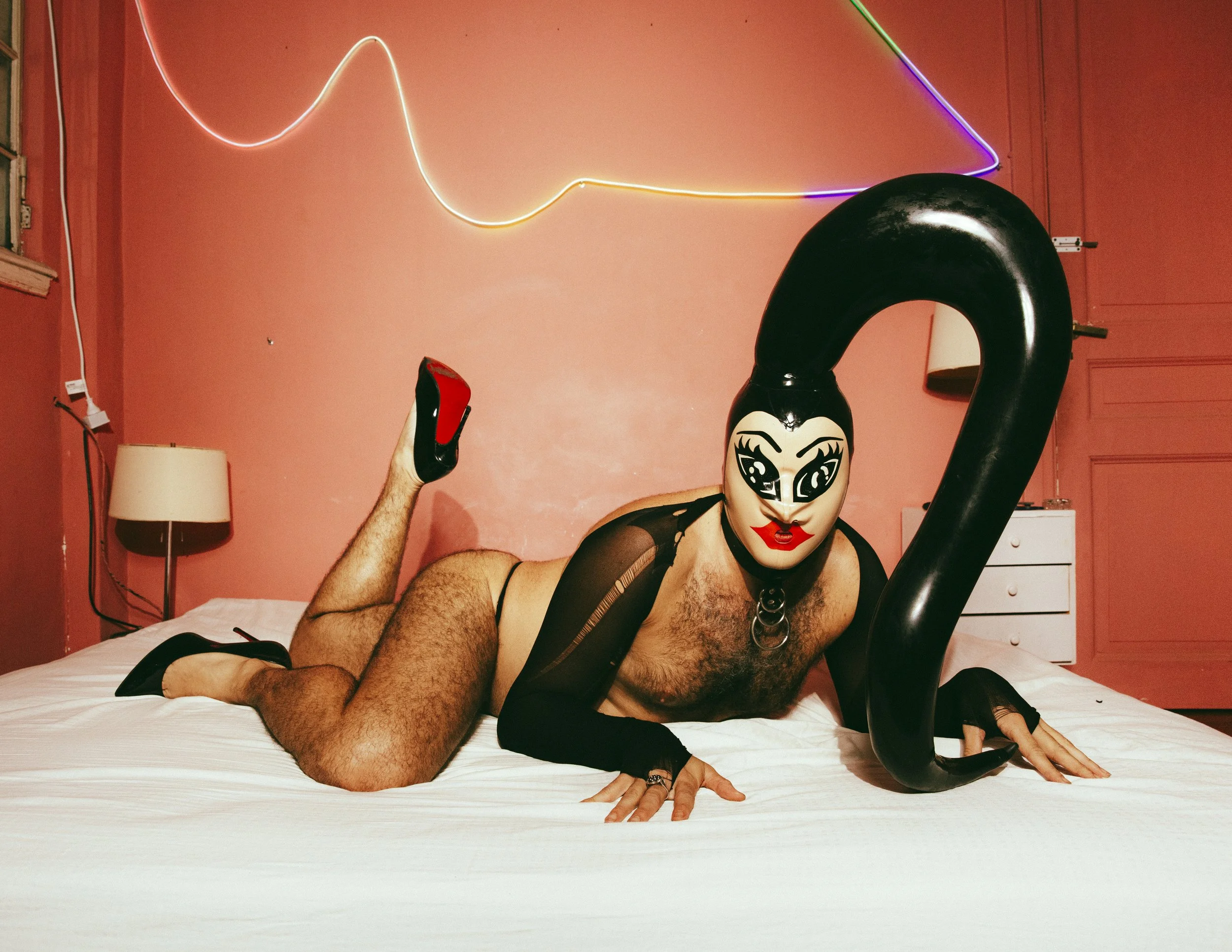
Fifi
One of those dysphoric Sundays in Buenos Aires. I’m a tango singer, usually able to handle the blues after a long vampire weekend, but that day, a young, hot photographer showed up at my door a day earlier than expected. I tried to improvise powerful femininity, but soon realized my sadness was bigger than me. So I summoned my saint, San La Mostra. Latex makeup, my armor to fight against the pressure of being hyper-femme as a trans fat femme. When I enter that state, my emotions run free. I feel power in being true to my low astral.
When I’m lost, I think sex is the only thing I can trade. But that day, faced with a Brazilian boy overdressed in European clothes, I felt something else, an ancient connection. Like I could show him my rawest self. Can you feel the power of my sadness and want me anyway? I told him about my grief: losing my father, the deaths of friends, contemplating the future in this crazy world. Over the years, I’ve been creating rituals new ways to challenge and meet death. For me, as a trans artist, death is another friend someone I should laugh with, dance with, stay up late with, and always negotiate with.
Fifi Tango is a teddy-trans, non-binary artist from Misiones, at the tri-border of Argentina, Brazil, and Paraguay now based in Buenos Aires. She’s a curvy, hairy, high-femme host who swings between softness and chaos. Her performances blend drag, witchcraft, kink, and tango into a raw, unforgettable spectacle.
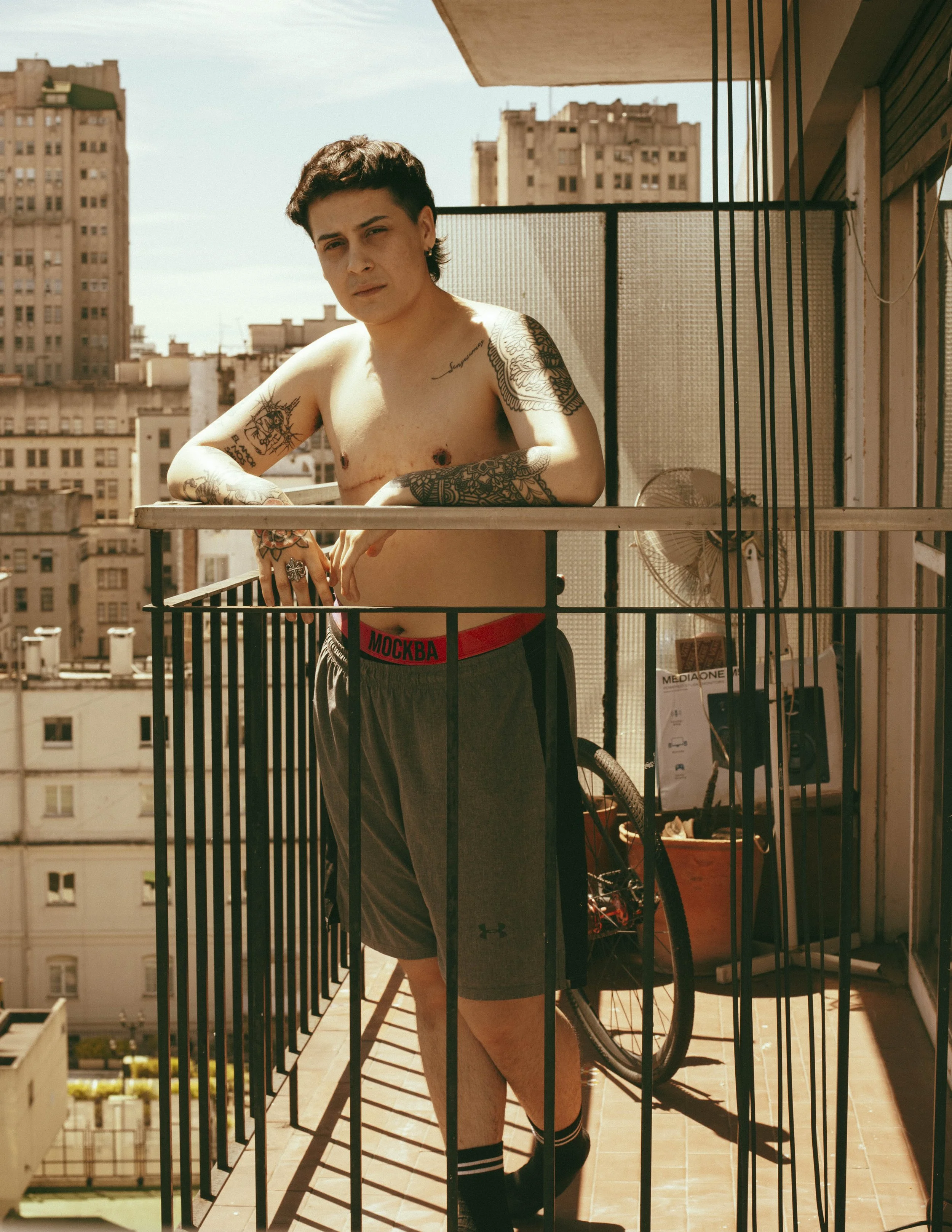
Har
I've decided to start this journey in Buenos Aires. This is the first image of the project. I walked into Har's house, and on a very sunny day, as the door swung open, I saw his mom cooking in the kitchen. He had just had top surgery, and he reached out to give me a gentle, heartfelt hug.
We began thinking about how he wanted to be seen and remembered. He mentioned that a shirtless photo could capture a dream he’d always held a vision he’d imagined for himself and serve as a testament to progress and a reflection of these times.
Later, outside, he took off his shirt and shared more about himself:
I'm Har, 29 years old. I'm a DJ, actor, and music producer. I also work as a national operator for the Argentine Healthcare System within the Ministry of Health.
Reflecting on his journey, he softly said,
"The beginnings, the fears, the small victories. I started my internal transitions long before any external changes."
His mother quietly appeared behind the camera, crossed her arms, and looked at him with sparkling eyes, silent but proud.
He often says, "It is healing in every way."
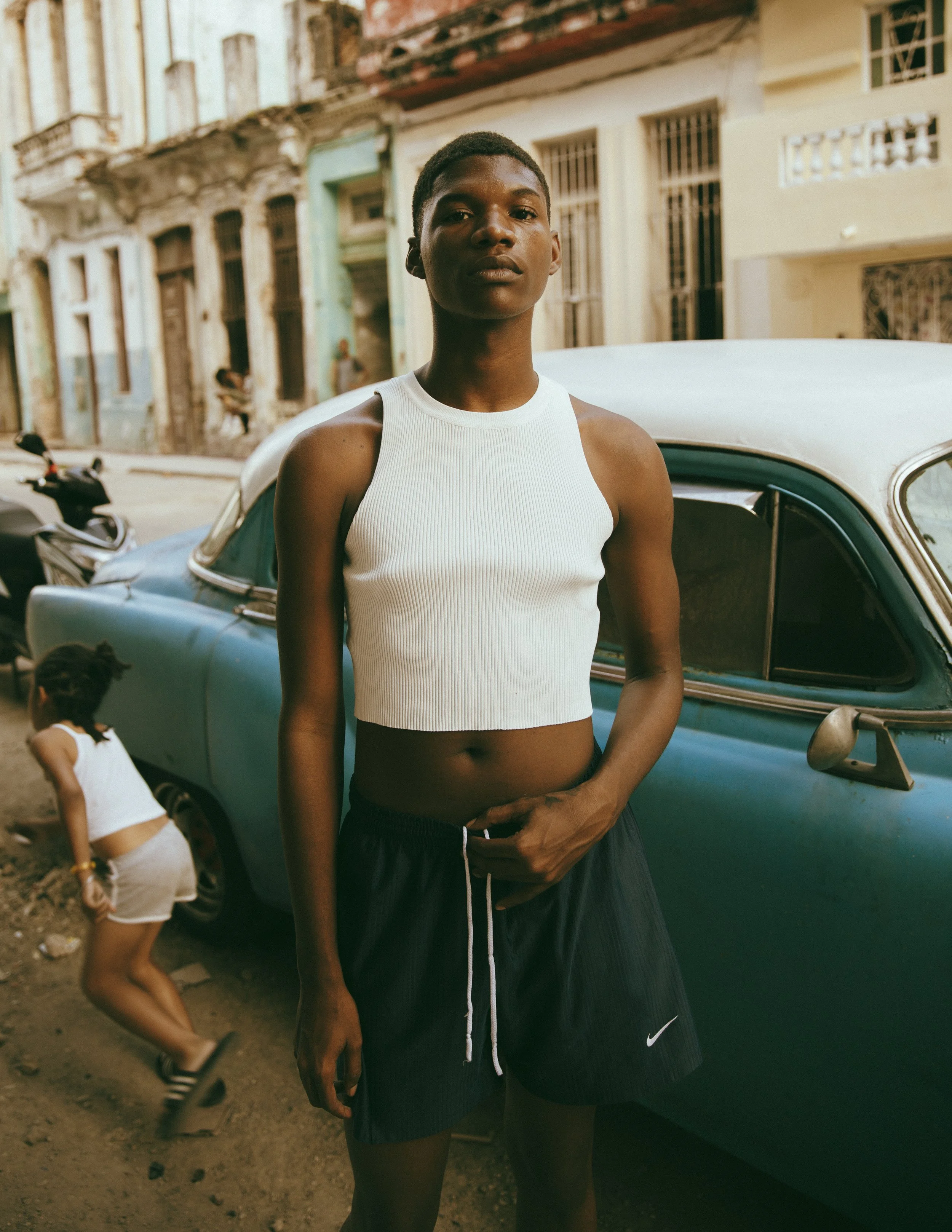
Andy
Andy, lives in Havana, Cuba.“I live alone with my mother; my father has passed away, and I have a brother who is in prison. Life has been tough, there’ve been days when everything feels heavy, when fear seems to take over. But I’ve learned that living alongside fear is possible. I believe that if we only cared about fear all the time, we wouldn’t really be alive. Fear is part of us, just like joy or sadness.
Every moment of shame that pulls us apart, every doubt that makes us question ourselves, despite all that, we keep going. We are here, afraid, but also present, because if we stopped feeling anything at all, we’d lose track of what causes us pain and, more importantly, what makes us happy, what excites us.
I’ve learned that embracing those feelings, even the uncomfortable ones, is what keeps us grounded. Life in Havana, with all its struggles, has taught me that. It’s not about pretending everything is perfect, but about finding strength in what we feel and learning to keep moving forward, one day at a time.”
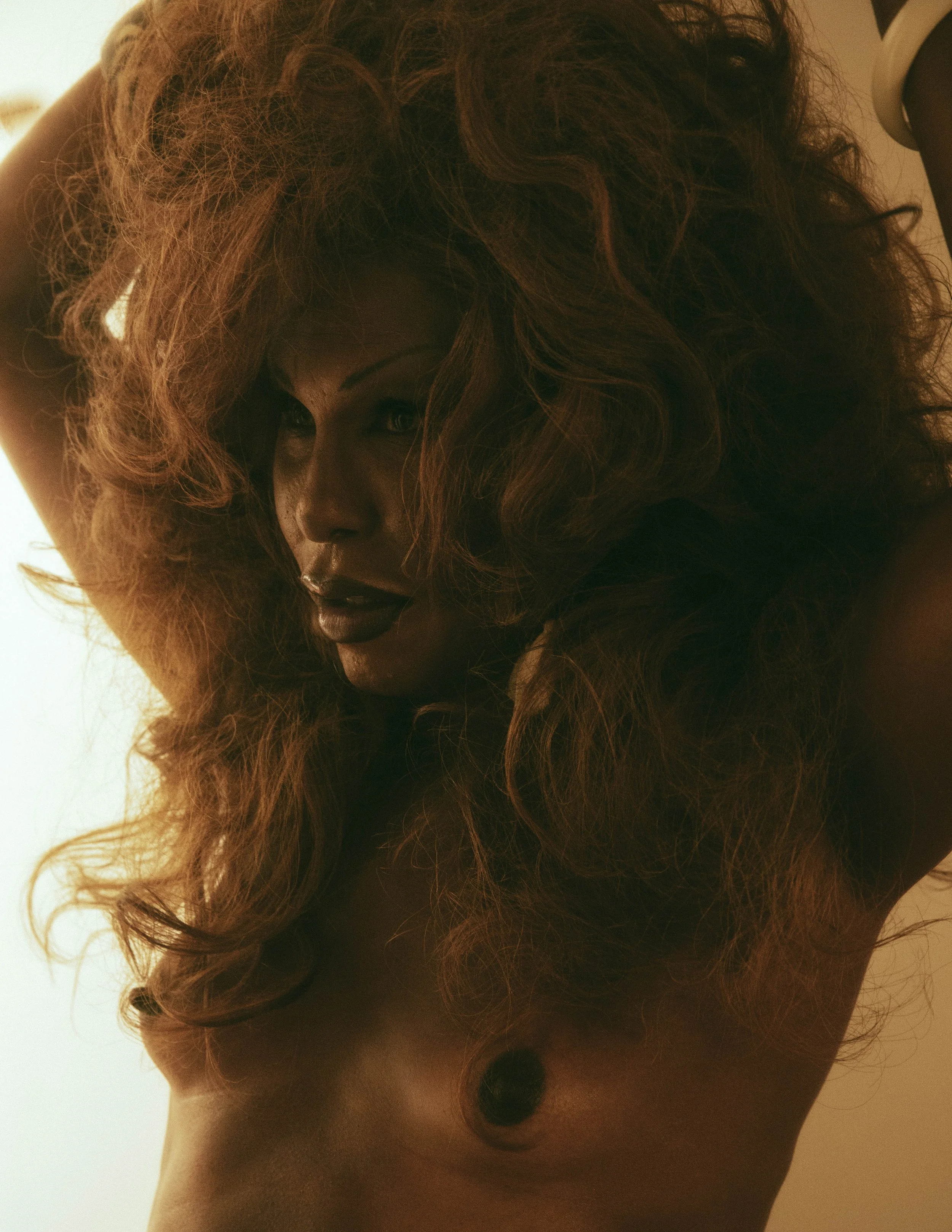
Max Weber
The joy of contemplating my bodies and the tenderness of our senses create a desire to look into each other’s eyes through the simplest gestures. These experiences remind us to choose ourselves on the path to happiness while also alerting us to the threats that society sometimes imposes on bodies like mine.
Max is an artist and television presenter from São Paulo who stands out in the Brazilian art scene. She was born in Paraíba and moved to São Paulo at a young age, growing up amidst the city's rich cultural diversity.
Her strong personality, authentic style, and work that blends fashion, art, and personal expression. As an artist, she employs various media, including fashion, performance, and visual art, to explore themes related to identity, body, gender, and popular culture. Her career is characterized by a constant questioning of traditional standards and a pursuit of complete freedom of expression.
She frequently shares her personal experiences, struggles, and victories, inspiring many people to accept themselves and fight for their dreams. Her charismatic personality and authenticity make her a prominent figure in the Brazilian cultural scene.
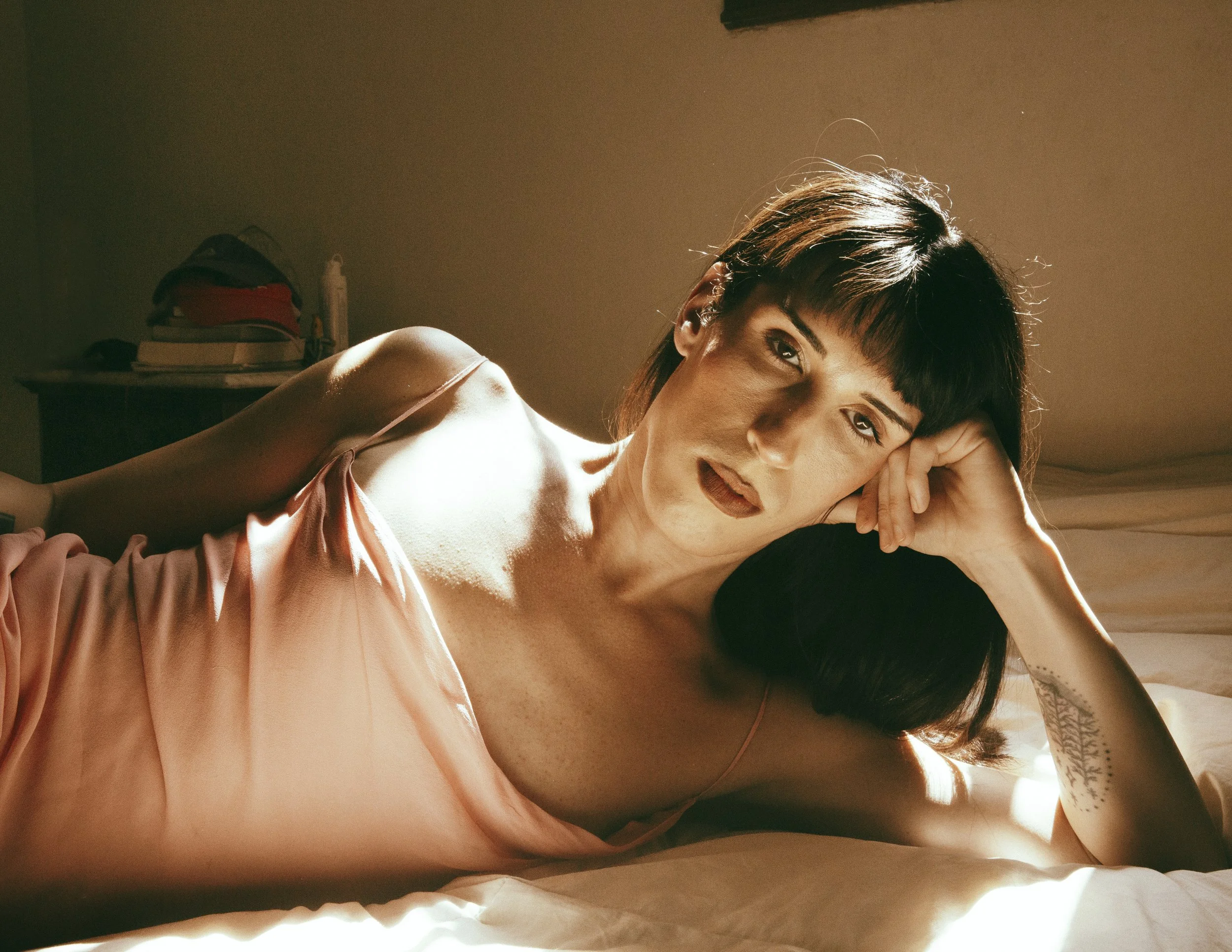
Eva
My name is Eva Lucero, known as Lucero. I’m from Rosario, and I’ve been living in Buenos Aires for about a year. For a long time, I’ve been carving my artistic identity, exploring roles and reconnecting with myself. My journey has been deeply personal, challenging fears, insecurities, and internal voices that tried to define me.
Deciding to leave the city where I was born and venture into other scenes in Buenos Aires and Córdoba marked a turning point. It was a declaration of owning who I am and why I came into this world: to give show, to reveal my truth. As a trans woman, Buenos Aires has been both a place of opportunity and confrontation, a space where I confront society’s expectations and my own fears. My art is raw, intimate, and rooted in my deepest pains, transforming vulnerability into a brighter future.
Living here has taught me that authenticity is the ultimate act of rebellion. To be trans in Buenos Aires means to fight for visibility, to reclaim my voice and my space.
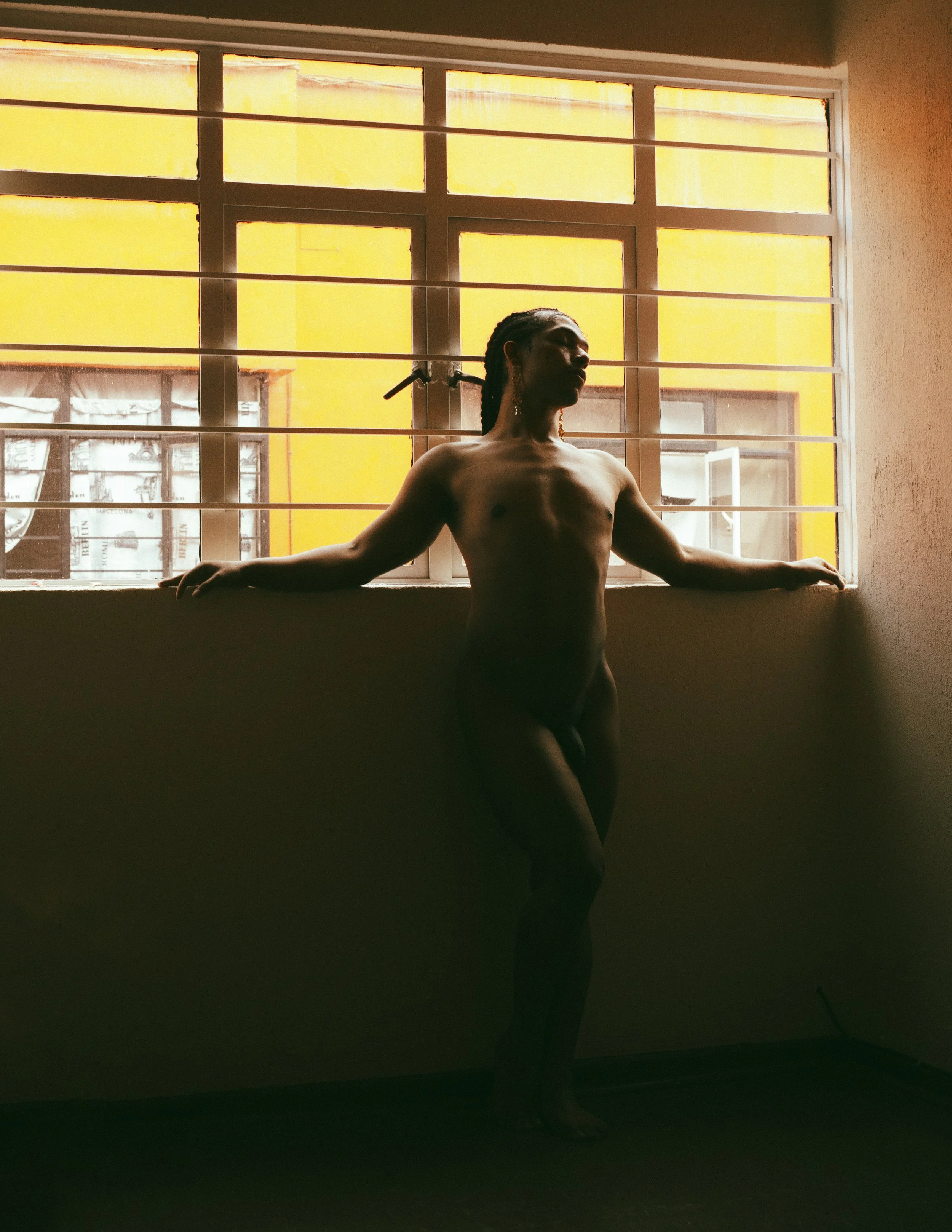
Nars
I met Nars in Juárez, central Mexico City. We hadn’t planned anything, I got her number from someone I photographed the day before. She asked if I wanted to come up for the photos, welcomed me into her apartment, and began introducing herself.
I’m La Nars, 25, a trans woman, artist, dancer, and event organizer for the trans, Black, and Prieta communities. After a few minutes into our conversation, she shared that her plans were interrupted when COVID arrived in Mexico, forcing her to return to Cancún. She finished university online and searched for work, but faced her biggest challenges: the loss of her grandparents and uncles to COVID. Soon after, she tested positive for HIV. She initially faced it alone but soon realized she needed support. The murder of a person living with HIV in Cancún for disclosing his status deeply affected her, fueling fears of being discovered and recognized. But those fears no longer control her life.
With her savings and dreams, she moved to Mexico City, telling herself, “Whatever comes, will be good.” Since arriving, she’s discovered a strength and self-worth she never knew she had. Embraced by her chosen family, she knows she can always find a safe, understanding space. Here, she breathes and she is.
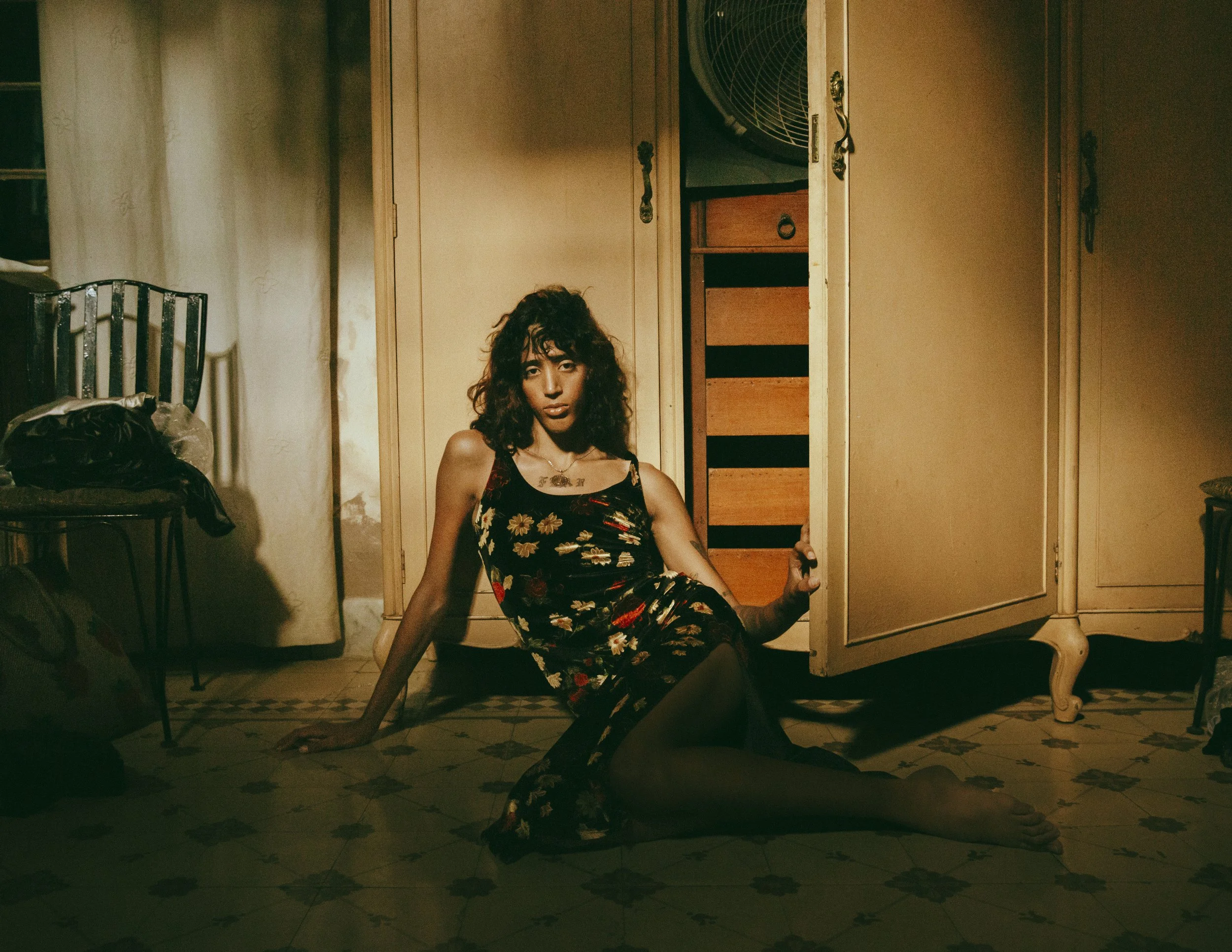
Rich
My name is Richard Castillo Castro, and I come from Havana, Cuba. Havana’s a city full of life, it speaks to my soul, the rhythm, the history and it’s a place where most LGBT folks end up, because it offers a bit more freedom, a sense of community, and a chance to be yourself. My parents are my confidants and the core of who I am. When I finally shared my truth, something they had probably guessed they looked at me with kindness and said, “What is known doesn’t need to be asked.” That’s a phrase I’ll carry forever.
Life hasn’t always been easy, I’ve faced harsh words, doubts, and at one point, I almost gave up. But I found my way back. Now, I’m just being me. If my truth makes you uncomfortable, then look elsewhere and be mindful of where you’re directing your gaze. Being on the land that holds my culture is a privilege that comes from not being afraid. I was born in the south, into a poor family, on the periphery, and I’ve never had fear of the street.
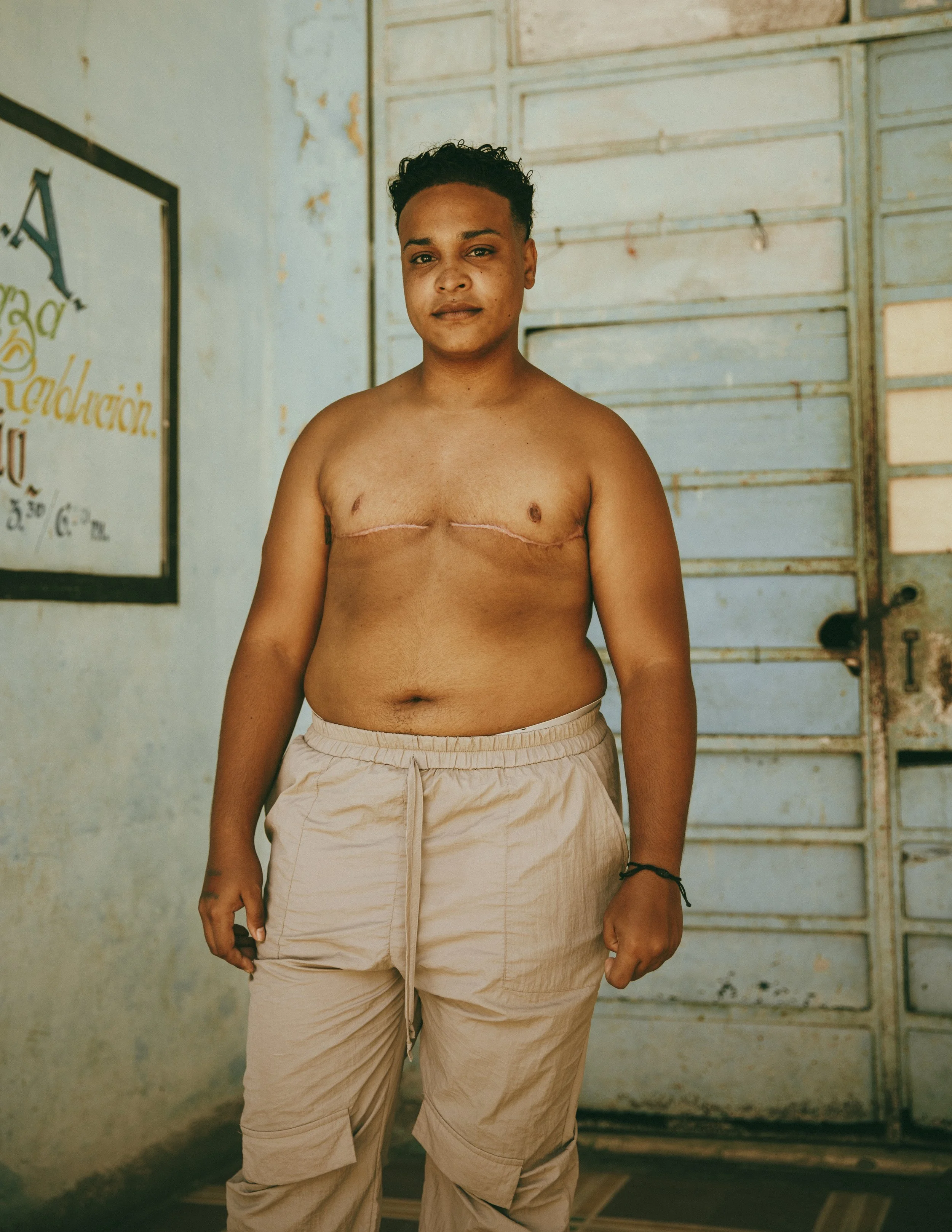
Dani
Dany Ortiz, is 25 years old and grew up in Alamar, East Havana, where he still lives today. Living in Alamar, like many places in Havana, is an experience of contrasts, full of challenges but also full of achievements and things to appreciate.
“My experience as a trans father is living parenthood in a very universal way. Gender identity does not compete with the role of a parent; on the contrary, it strengthens it. Living authentically as who I am is the foundation that allows me to be a present, stable, and loving father to my daughter, who accepts me naturally as her dad. The balance doesn’t come from separating these two parts but from integrating them. The responsibilities are the same as those of any parent. This experience has given me an opportunity to redefine notions of family, demonstrating that its core is love and commitment, not biology. For my daughter, being inclusive is the norm. Without even trying, I have become a living example that authenticity and paternal love are all that truly define a father"